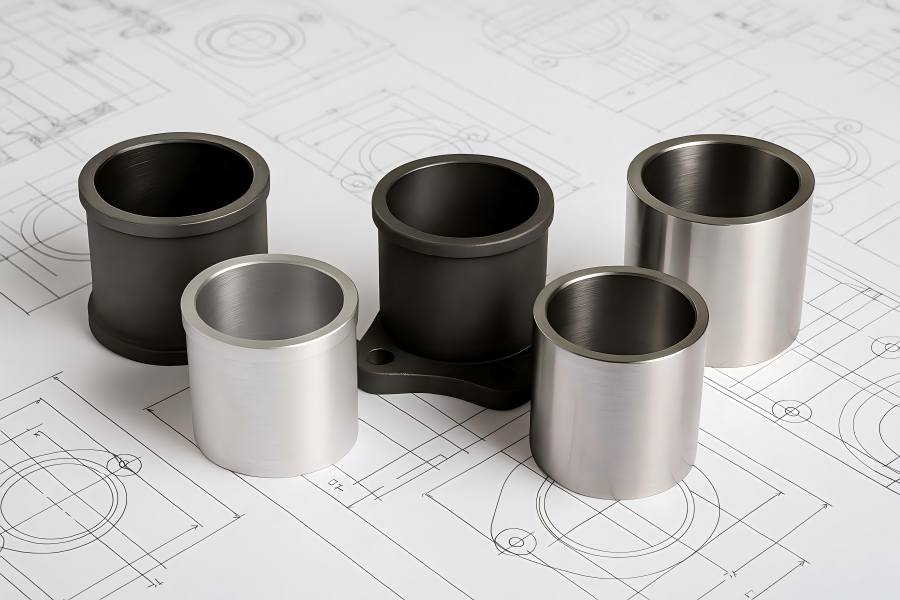
Why Custom Cylinder Sleeves Are Becoming a Standard Offering in B2B Engine Solutions
In today’s industrial engine market, standard components are no longer enough. As performance requirements tighten and applications diversify, custom cylinder sleeves are quickly becoming a baseline expectation rather than a premium option.
The Shift Toward Application-Specific Engine Design
B2B engine buyers—OEMs, rebuilders, and industrial equipment manufacturers—are under increasing pressure to deliver engines tailored to specific operating environments. Whether the application involves high thermal loads, abrasive media, extended duty cycles, or strict emissions standards, generic cylinder sleeves often fall short.
Custom cylinder sleeves allow engineers to precisely match bore dimensions, wall thickness, material composition, and surface treatments to real-world operating conditions. This modification lowers the possibility of early wear or failure while increasing engine efficiency, durability, and dependability. As engines become more application-focused, component-level customization is no longer optional.
Performance, Longevity, and Lifecycle Cost Advantages
Optimizing lifecycle costs is one of the main reasons why custom cylinder sleeves are becoming more popular. Standardized sleeves may be less expensive initially, but they frequently result in higher long-term costs because of early engine overhauls, frequent maintenance, or accelerated wear.
Custom sleeves can be engineered for:
- Improved heat dissipation and thermal stability.
- Enhanced wear resistance for high-friction or contaminated environments.
- Optimized oil retention through tailored surface finishes.
- Better compatibility with advanced piston and ring designs.
These performance gains translate directly into longer service intervals, reduced downtime, and lower total cost of ownership—key metrics for B2B buyers operating fleets, heavy equipment, or mission-critical machinery.
Material and Manufacturing Flexibility
Another reason custom cylinder sleeves are becoming standard is the expanded availability of advanced materials and manufacturing methods. Today’s suppliers can offer gray iron, alloyed cast iron, ductile iron, steel-based alloys, and composite solutions depending on load, speed, and thermal requirements.
In high-performance or heavy-duty applications, suppliers increasingly integrate custom metal forging techniques into sleeve production workflows, particularly when strength, grain structure control, or fatigue resistance is critical. Combined with precision machining and surface engineering, this allows cylinder sleeves to meet demanding mechanical and thermal specifications that traditional casting alone may not satisfy.
Supporting Engine Downsizing and Higher Power Density
It is anticipated that modern engines will produce higher power with smaller footprints. This trend toward higher power density places significant stress on cylinder components, especially the sleeve-to-block interface.
Custom cylinder sleeves help address these challenges by enabling:
- Tighter dimensional tolerances.
- Reinforced sleeve structures for thin-wall engine blocks.
- Improved interference fit and sealing performance.
- Enhanced resistance to distortion under high combustion pressures.
As downsized engines become common in industrial, automotive, and off-highway sectors, custom sleeves are essential for maintaining durability without increasing engine size or weight.
Integration with B2B Supply Chain Strategies
From a procurement perspective, offering custom cylinder sleeves aligns well with modern B2B supply chain strategies. OEMs increasingly prefer long-term partnerships with suppliers capable of co-engineering components, supporting design revisions, and scaling production reliably.
Suppliers that provide custom sleeves often deliver them as part of a broader portfolio of forged parts, machined components, and engine subsystems. This reduces supplier fragmentation, improves quality consistency, and shortens development cycles—especially important for engines designed for niche or specialized markets.
Standardization Through Customization
Ironically, customization is becoming standardized because it solves repeatable problems across industries. Construction equipment, marine engines, power generation units, agricultural machinery, and industrial compressors all face similar pressures: higher efficiency, longer service life, and lower operating risk.
Custom cylinder sleeves provide a scalable solution that can be adapted across platforms while still meeting unique application demands. As a result, many B2B buyers now view “custom” not as an exception, but as the expected starting point.
Conclusion
Custom cylinder sleeves are no longer a niche upgrade—they are a strategic component of modern B2B engine solutions. By enabling application-specific performance, extending engine life, supporting higher power density, and aligning with advanced manufacturing and supply chain practices, custom sleeves deliver measurable value across the engine lifecycle.
Keep an eye for more latest news & updates on TheSmallBusinessTimes!


